Welcome to Metallurgical Hengtai (Tianjin)Technology Co.,Ltd
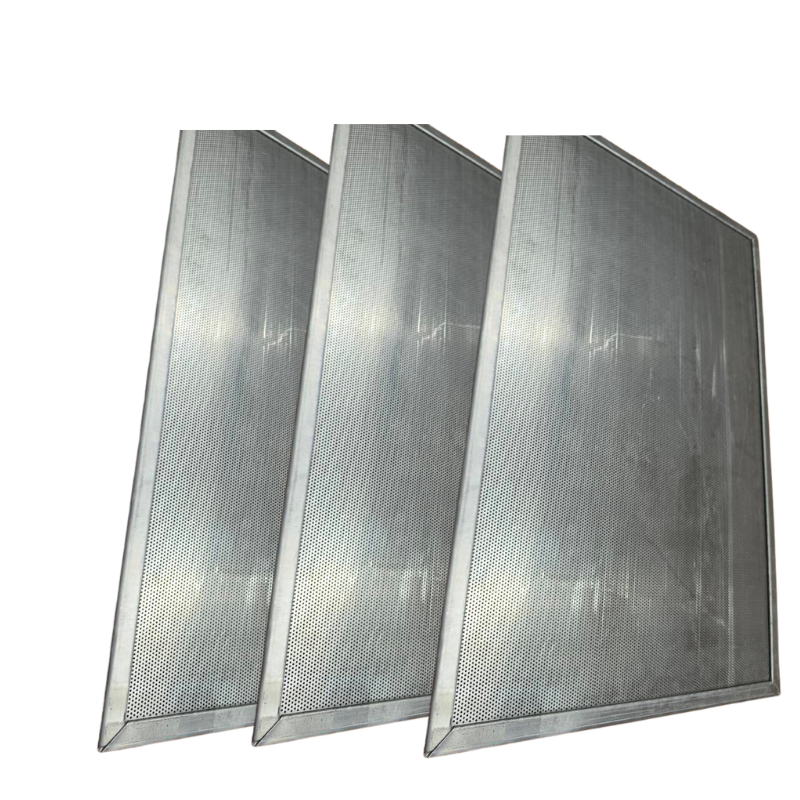
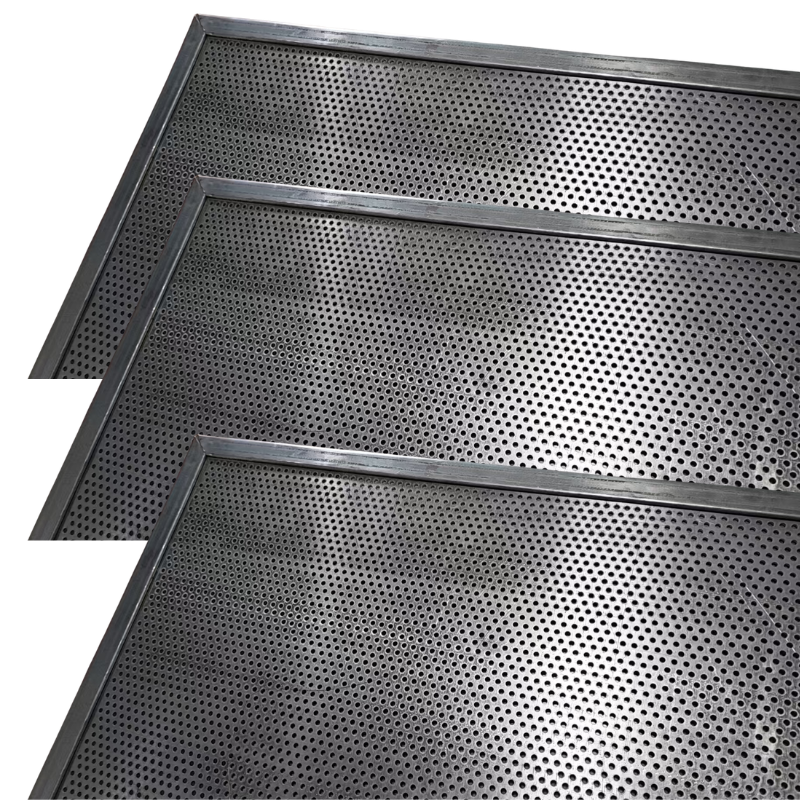
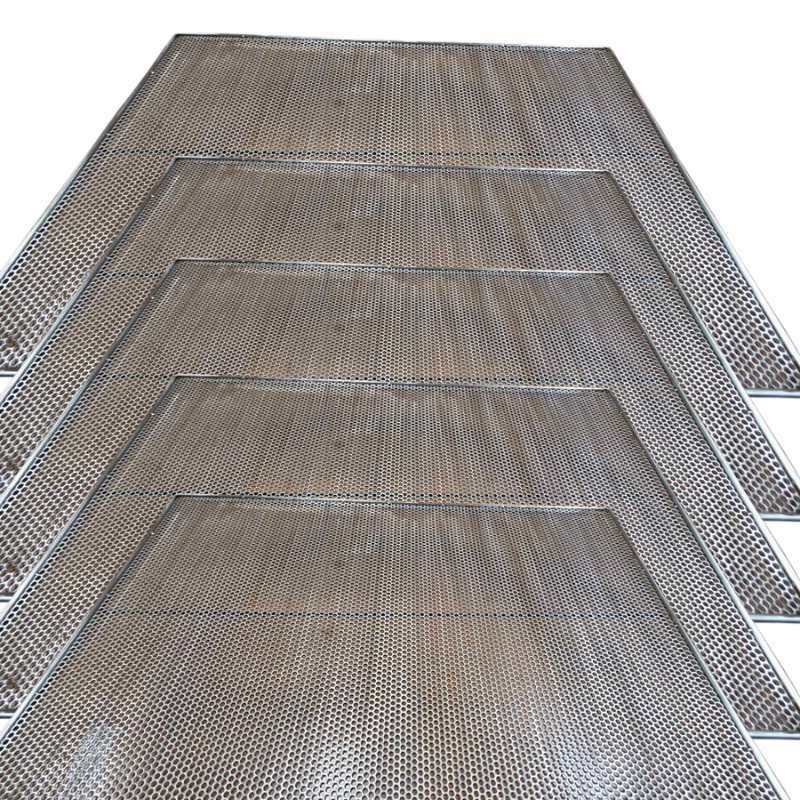
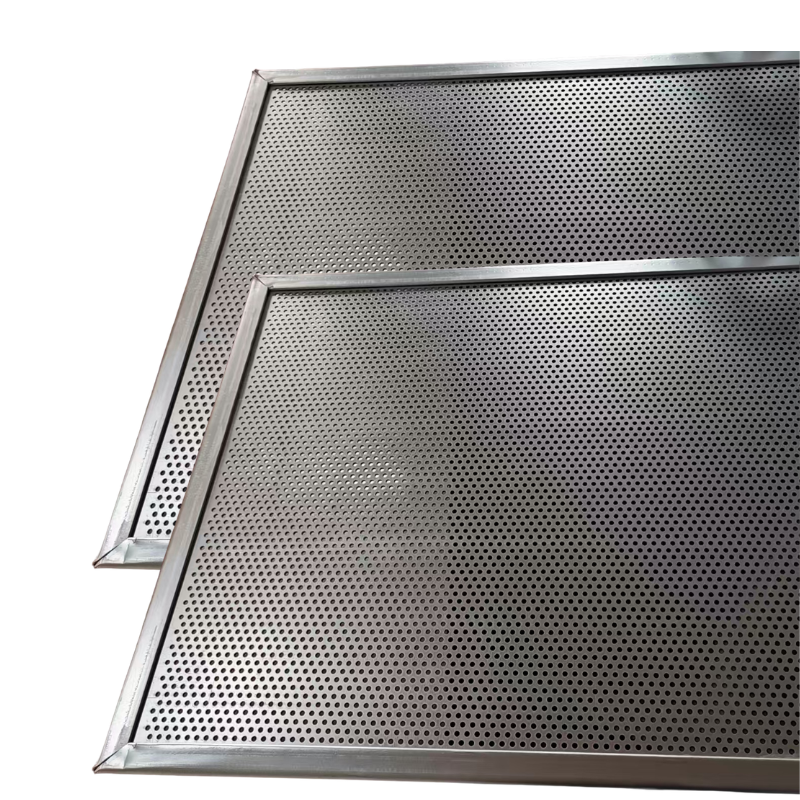
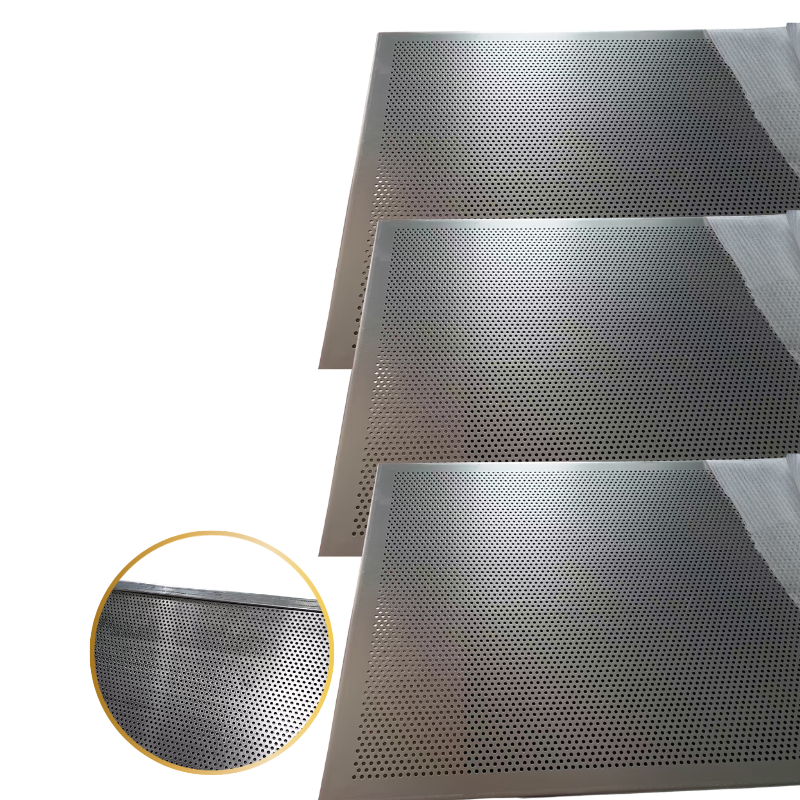
Food filtration mesh
Perforated Food Screens — The Number That Matters Is the Largest Hole
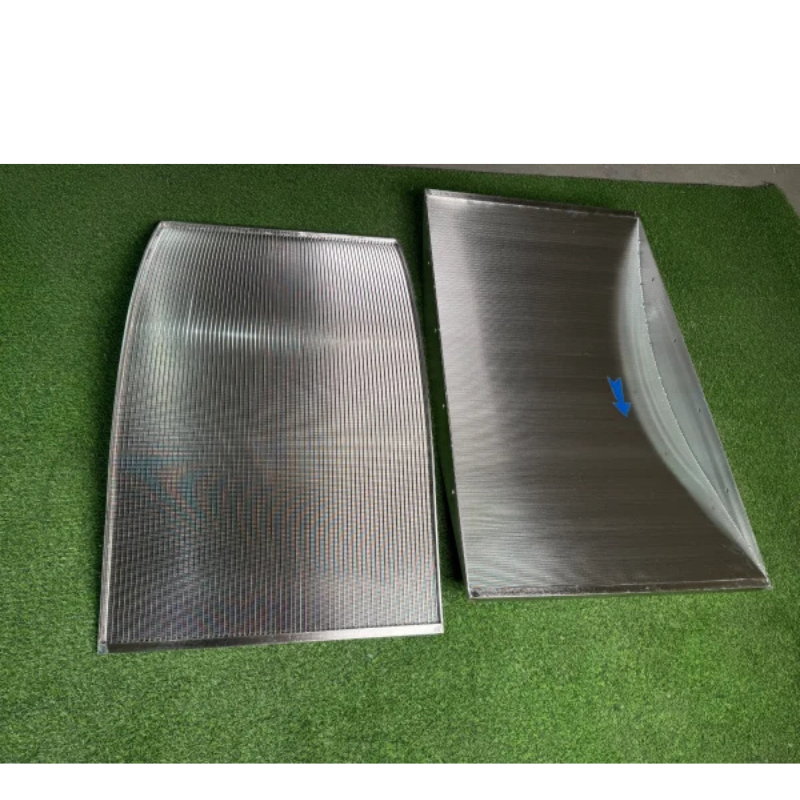
Perforated screens and sieve plates for sifters, plansifters, grading machines, sugar centrifugals and dewatering lines — 304 / 316L / duplex, deburred and electropolished to a food-contact finish, supplied with a documented aperture record.
On most screens the useful number is the average aperture. On a food screen it is the largest one. Where a screen is doing safety duty — protecting a filler, screening out foreign bodies before packing, or holding back oversize before a downstream process — it is frequently treated as a critical control point in the plant's food safety plan, and the job it does is to reject. A single aperture that has worn open, or one punched at the top of the tolerance, does not degrade that duty gradually. It passes exactly the contaminant the screen was bought to stop, and nobody sees it happen. That is why we quote an aperture range with a stated maximum, inspect against it, and ship the record with the screen — and why it is worth deciding with your plant whether the screen should be individually identifiable, so that the aperture check can be logged as a monitoring record instead of being done informally.
The second thing that separates a food screen from an industrial one is not the pattern at all — it is the edge of each hole. A punched hole is a straight-walled sheared hole: the punch pushes through, and the exit face carries a rough break zone and a burr. That edge is a crevice. Product lodges in it, cleaning fluid does not reliably reach into it, and it becomes a site where residue accumulates and biofilm establishes. It is a hygiene control step, not a finishing detail. So the apertures are deburred and the contact surface is electropolished, which removes the sheared micro-roughness and brings the surface to a food-contact finish — typically Ra ≤ 0.8 µm on the product-contact face, against a mill finish that is an order of magnitude rougher. Where the duty or the cleaning regime calls for it, we produce a tapered aperture rather than a straight wall, so the opening has a smooth radiused edge with nothing for product to catch on.
Materials and paperwork are inseparable from the screen in this application. 304 is adequate for many dry products; 316L is the right answer where the product is acidic or saline, or where cleaning relies on chlorinated sanitisers, because chloride pitting attacks 304 — and a pitted screen is a screen with an enlarging aperture. Duplex 2205 covers the heavier positions. Because stainless steel has no material-specific measure under EU food-contact law, compliance in Europe runs through the framework Regulation (EC) 1935/2004, with Council of Europe resolution CM/Res(2013)9 as the reference for metals and alloys — which is what a Declaration of Compliance is written against — while the US market looks to NSF/ANSI 51 for food equipment materials. We supply the material certificate to EN 10204 3.1 with the heat number and the compliance documents your audit asks for, so the screen is traceable back to the steel it was made from.
Two further things decide whether a food screen lasts. If it runs on a vibrating or oscillating machine, the screen is a plate carrying a dense array of holes under cyclic load, and fatigue cracks initiate at the aperture edges — which is why the pattern layout, the margins and the stiffening are engineering decisions rather than artwork, and why a cracked screen on a food line is a foreign-body incident rather than a maintenance item. And the assembly has to be crevice-free where the screen meets its frame, and removable for cleaning, because a screen that traps product at its own edge quietly undoes the surface finish you paid for.
Specification at a glance
| Types | Sifter and plansifter screens,safety and foreign-body screens,grading and sizing screens,sugar centrifugal working and backing screens, starch and vegetable dewatering screens,perforated plate test sieves |
| Aperture | [0.3]-[12]mm,quoted with a stated maximum,inspected and recorded per screen |
| Aperture forms | Round,square,slotted;tapered/conical apertures for hygiene-critical duty |
| Open area | [15]-[50]% |
| Thickness | [0.4]-[2.0]mm typical for food screens;heavier where the duty is structural |
| Materials | 304,316L,duplex 2205 |
| Surface finish | Deburred on both faces;electropolished or passivated to Ra≤[0.8]μm on product-contact surfaces |
| Hygiene | Crevice-free aperture edges;tapered apertures where specified;removable,drainable,cleanable assembly |
| Durability | Pattern layout,margins and stiffening set against the machine's cyclic duty |
| Compliance | Declaration of Compliance to(EC)1935/2004 with reference to CM/Res(2013)9;NSF/ANSI 51 documented on request |
| Documents | EN 102043.1 MTC with heat number,aperture inspection record including the maximum,surface roughness record, Declaration of Compliance,lot traceability,packing list,B/L,certificate of origin |
Why food plants and equipment builders buy here
Maximum aperture quoted, inspected and recorded. A safety screen is verified as holding rather than assumed to hold — and the record can go straight into your monitoring file.
Hole edges deburred and electropolished to a food-contact finish. The apertures stop being a residue trap and a biofilm site, which is where a food screen actually fails its hygiene audit.
316L and duplex where the product or the cleaning chemicals demand it. Chloride pitting is prevented rather than discovered as an enlarging aperture.
Traceable to heat number, with the compliance documents your audit asks for. Screen, steel and paperwork arrive as one package.
Send your screen drawing or sample, aperture size and pattern, open area, thickness, material, machine duty and the compliance documents your market requires. We will confirm the aperture tolerance and surface finish we can hold, quote FOB [Tianjin] and give you a lead time — usually within [24] hours.