Welcome to Metallurgical Hengtai (Tianjin)Technology Co.,Ltd
Cone Filter
Perforated Cone Strainers — Sized for the Worst Debris the Line Will Ever Carry
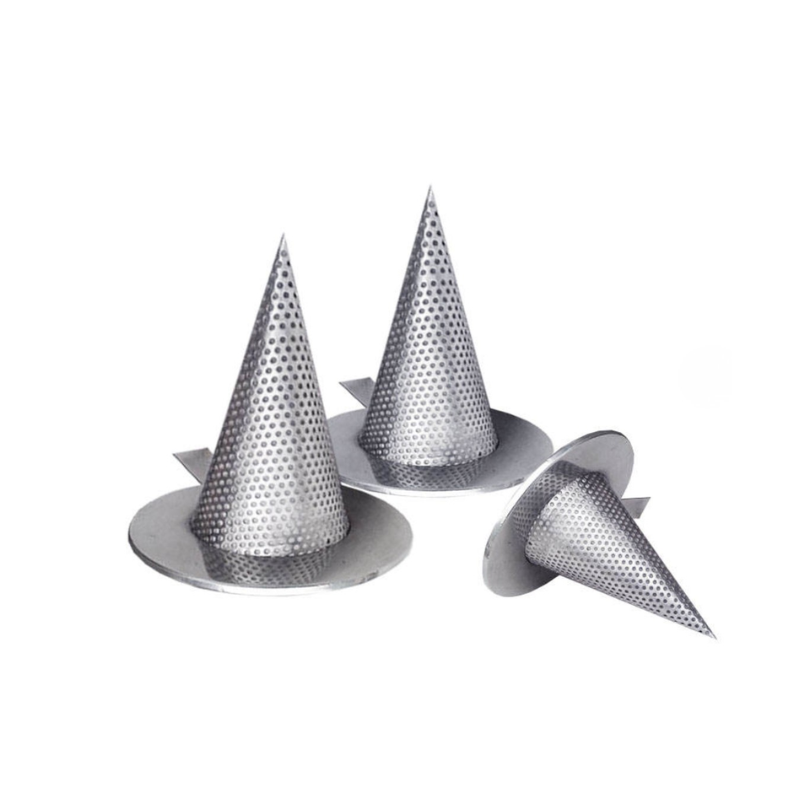
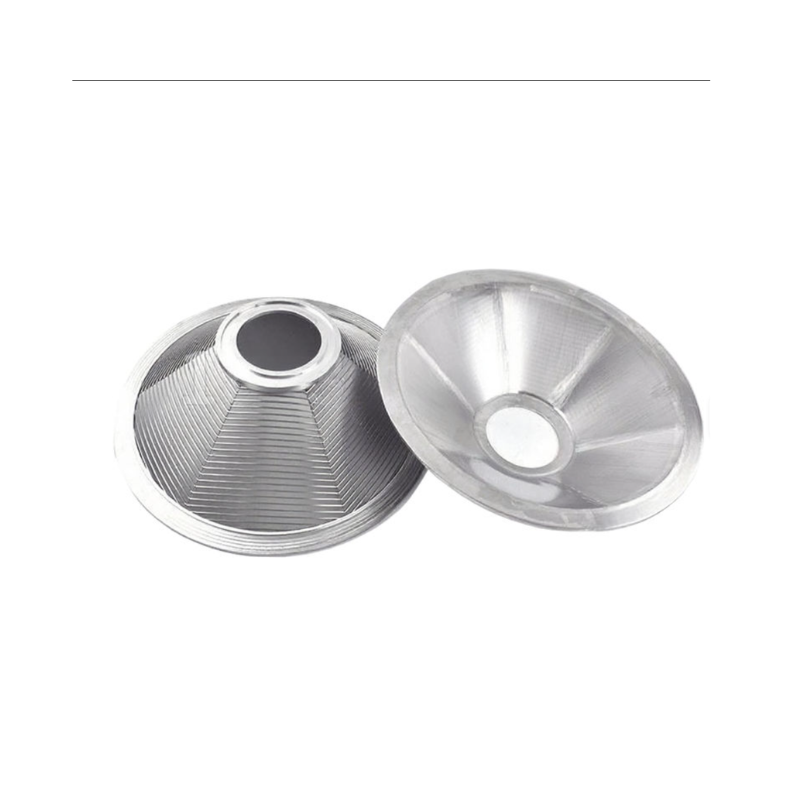
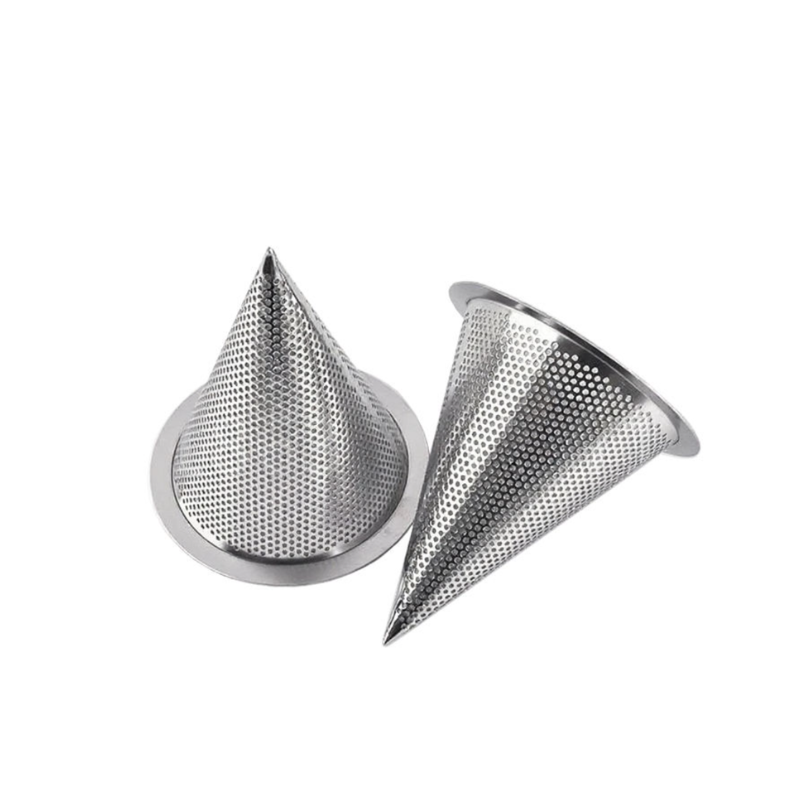
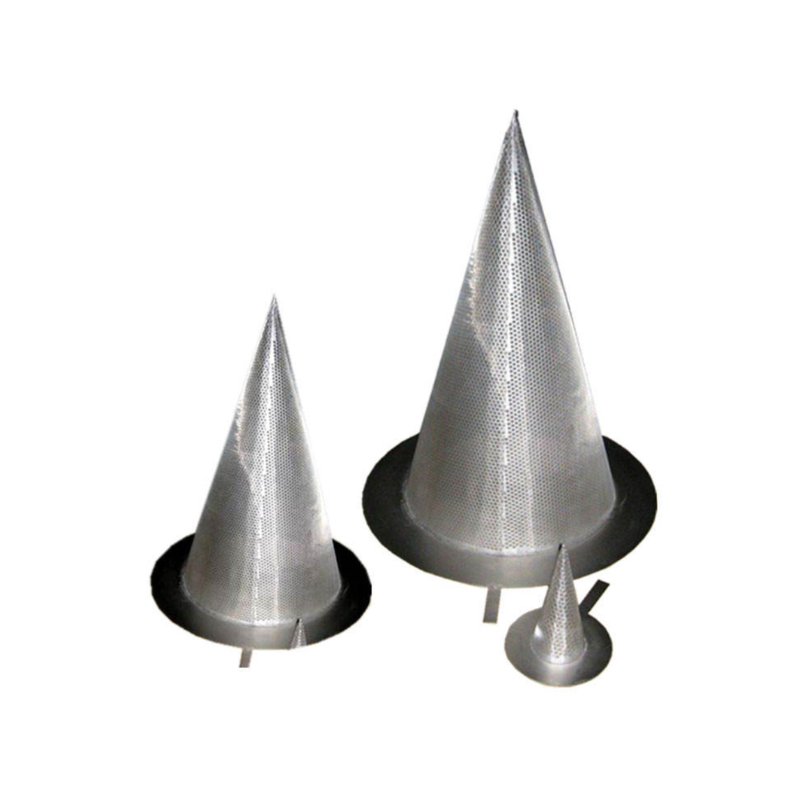
Perforated single-cone strainers with a solid base disc and extraction tab, made to your flange face — carbon steel, stainless 304 and 316L, with mesh-lined options where you need a finer rating.
A disc strainer and a cone strainer do the same job with very different results, and the difference is surface area. A flat disc fits the pipe bore and offers nothing beyond it, which is why plate-type temporary strainers carry the highest pressure drop of any style. A cone turns that same bore into a far larger working surface, so it holds more debris before the differential pressure climbs to the point where you have to shut down and pull it. Orientation is the second decision, and it is a real one: the cone can be installed with its tip facing upstream or downstream, and the two are not equivalent — they distribute debris differently and collect it in different places. Tell us how you intend to install it and what debris you expect, and we will tell you which orientation and cone angle suit that duty.
Commissioning is the dirtiest period in a pipeline's life. The line is still carrying weld slag, mill scale and construction grit — the heaviest debris it will ever see — and that is precisely when differential pressure rises fastest. A strainer that fails at that moment does not fail quietly: it comes apart and discharges its contents downstream into pumps, valves, instruments and heat exchangers. So we treat two things as critical. The first is the cone's ability to hold its form under differential pressure at your line temperature. The second is the base disc, because the disc is what seals between the flanges — and if it does not seat fully around its circumference, debris bypasses the strainer entirely. At that point the strainer becomes a spacer, which is the most expensive kind of failure, because nothing on site tells you it has happened.
Specification at a glance
| Type | Si ngle-cone perforated strainer (cone / "witch's hat"),flange-mounted |
| Cone geometry | Cone angle,height and apex formed to your bore and pressure-drop limit |
| Base disc | Solid disc,OD,thickness and gasket face made to your flange;extraction tab standard |
| Perforation | Round,60° staggered;[0.5]-[12]mm;open area [20]-[60]% |
| Finer rating option | Internal mesh liner behind the perforated cone where the rating must be finer than the perforation |
| Materials | Carbon steel,galvanized,stainless 304/316L,duplex— matched to line fluid and temperature |
| Construction | Formed cone,closed apex,welded to base disc;longitudinal seam disclosed on the drawing |
| Service limits | Design pressure and temperature confirmed per order against your line conditions |
| Documents | EN 102043.1 MTC,dimensional report, weld inspection record,packing list,B/L,certificate of origin(FormE/Form A as applicable) |
Why buyers specify their strainers here
Surface area matched to your dirt load. Cone angle, height and perforation are sized against the debris you expect and the differential pressure you can tolerate — not just the pipe bore.
Base disc made to your flange face. OD, thickness and gasket face cut to your flange and bolting so the disc seats and seals instead of letting debris bypass.
Orientation advice included. Upstream or downstream installation is a decision, not a detail, and we will tell you which one fits your debris.
Service limits stated per order. Pressure and temperature confirmed against your line conditions, so you know the strainer suits the duty before it is installed between irreplaceable flanges.
Send your line size, flange standard and rating, gasket face, expected debris, design pressure and temperature, plus the perforation or rating required. We will confirm the cone geometry, base disc dimensions and construction, quote FOB [Tianjin] and give you a lead time — usually within [24] hours.